
200,000 Students at 100 Colleges and Universities Save 1.74 Gigawatt-Hours of Electricity During Campus Conservation Nationals 2012
 The Center for Green Schools at the U.S. Green Building Council (USGBC), through its USGBC Students Program and in partnership with Lucid, Alliance to Save Energy and the National Wildlife Federation, is pleased to announce the results of the 2012 Campus Conservation Nationals (CCN) competition. This year, nearly a quarter-million students at 100 colleges and universities across the U.S. collectively saved 1,739,046 kilowatt-hours of energy, equivalent to 2.6 million lbs of CO2 and $157,925 in savings — effectively removing 151 U.S. homes off the grid for a year. This year’s results surpassed the original competition savings goal of one gigawatt-hour of electricity. Students also saved 1,554,814 gallons of water, equivalent to 10,300 shower hours.
From Feb. 6 through April 23, 2012, students competed to achieve the greatest reductions in their residence halls over a three-week period, with savings from each campus contributing to a collective national challenge goal. Students organized peers through direct action in their residence halls, and extensively utilized social media to motivate and encourage sustainable behaviors, proving that occupants play a critical role in greening their buildings. By making commitments to turn off unused electronics, take shorter showers, use the stairs instead of the elevator, and other simple tactics, students across the country demonstrated how individual actions make a difference in the way our buildings consume electricity and water. Read the article: 200,000 Students at 100 Colleges and Universities Save 1.74 Gigawatt-Hours of Electricity During Campus Conservation Nationals 2012
Solar Energy International Offers New Training
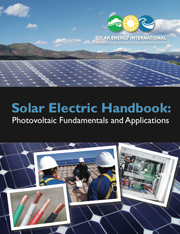 Solar Energy International (SEI), a leading provider of technical training in solar, wind, water power and natural building technologies, has selected Pearson to create a new professional textbook series available in print and eBook formats, Pearson announced today.
SEI offers hands-on workshops and online technical training for careers in renewable energy as well as continuing education for those already employed in the industry. Through its SEI Solar Professionals Certificate Program and other solar training, SEI serves between 2,000-3,000 students annually and has served over 20,000 students in its 20 years of service to the renewable energy industry.
Beginning in June, the first book in the new SEI Textbook Series will be available for SEI courses and other training organizations that have adopted SEI’s textbooks in solar electric design and installation and solar business and technical sales. Students have access to print and eBook formats through the textbook bundle and can access their content via their Mac or PC, or via Pearson’s eText for iPad app. Pearson’s eText for iPad app presents digital content in the same high resolution as on a computer, even when pages are zoomed, and displays perfect fidelity to the print book. Students can easily add their own personalization (notes, highlights, bookmarks) while working on their iPads.
“We partnered with Pearson for their experience and expertise in new learning models and technologies,” said Tresi Houpt, Executive Director for Solar Energy International. “These highly visual course materials create an immersive learning opportunity for our students. And the flexibility of Pearson’s iPad App lets our students download chapters and read them on the go when they’re at a job site or in the field.”
“Our collaboration with SEI highlights how we’re leveraging our resources and experience to support the unique needs of corporations, associations, government entities and nonprofit organizations. Renewable energy is a growing industry and our partnership with SEI will help more adults develop their skill set for these high-demand jobs and ultimately improve their livelihoods,” said Christopher Shenk, Senior Vice President at Pearson Learning Solutions.
For more information about SEI, visit www.solarenergy.org. For more information about Pearson’s professional education business, visit www.pearsonlearningsolutions.com.
Guy Kawasaki survived working for Steve Jobs twice. At Silicon Valley Bank’s CEO Summit on October 6, 2011, Guy shared lessons learned from the entrepreneur of the 21st century.
Guy Kawasaki
Solar Energy Training in Portland
ONTILITY and Graybar Electric Co. Respond to Growing Demand in Oregon
 HOUSTON & ST. LOUIS–(EON: Enhanced Online News)–Nationally recognized solar training company ONTILITY and Graybar Electric Co. will offer Entry Level Solar Electric Training on September 19-23, at Graybar in Portland, OR. The solar energy market in Oregon continues to grow rapidly and the demand for well trained installers is high.
“A comprehensive introductory solar energy course which includes system design and installation topics is a great way for anyone to get started in solar.”
ONTILITY presents our Professional Solar Training course for the purpose of preparing workers and businessmen to enter into the Solar Energy Workforce. Attending this award winning IREC Accredited Entry Level Solar Electric Training Class is the first step to becoming a member of the Solar Energy Industry. This class teaches the NABCEP Entry Level Learning Objectives and will get you started on a path that will lead you to a future in this exciting and fast growing industry.
During this five day class attendees will be taught valuable industry knowledge that is needed to join the Solar Industry as a:
• Solar Business Owner
• Solar PV Installer
• Solar PV Project Manager
• Solar Salesperson
• Solar PV System Designer
This class is suitable for anyone interested in solar energy – entrepreneurs, electricians and electrical, mechanical and general contractors and all others in the building trades who are interested in business opportunities in the Solar Energy Industry.
At a time when the U.S. economy overall is growing at an annual rate of around 2% and job creation continues to lag, the Solar Industry is growing by more than 50% per year and is expected to create 24,000 new jobs in 2011. A 2010 survey showed that more than 80% of property owners are interested in and plan to install solar energy systems on their property within the next five years. Legislative action by the State of Oregon, Federal solar incentive and programs sponsored by electric utility companies are having a dramatic effect on the growth of the state’s solar market.
The rapid growth of the solar market demands a well-trained workforce and is a key element in the growth and long-term success of solar markets. According to ONTILITY Director of Education, Ken Whiteside. “A well-trained workforce insures that solar installations will be done safely and that those systems will perform the way they are supposed to.” Mr. Whiteside continued, “A comprehensive introductory solar energy course which includes system design and installation topics is a great way for anyone to get started in solar.” The upcoming 40 hour ONTILITY class consists of five days of training, 8 a.m. – 5 p.m. each day. Those who complete the course are eligible to sit for the NABCEP PV Entry Level Exam. The 40 credits earned by completing the class also satisfy the education requirement for NABCEP PV Installer certification. Source: (EON: Enhanced Online News)
California’s Butte College Becomes First in the Nation to Generate More Than 100% of its Electricity from Renewables
Butte College, a Longtime Leader in Sustainability, Marks Historic ‘Grid Positive’ Achievement
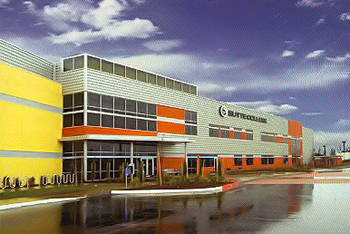 Butte College in California this week becomes the first college in the history of the United States to go ‘grid positive,’ meaning that it will generate more electricity from its solar arrays than it consumes and will deliver power back to the electric grid.
Butte College, located 75 miles from Sacramento and resting on a 928-acre wildlife refuge, will see significant cost savings from its solar arrays. The college estimates that it will save between $50 million and $75 million over 15 years, even after accounting for project costs and interest, by eliminating its electricity bill, getting paid for excess electricity production, and avoiding future electricity rate increases. These savings can be used to improve student offerings and increase enrollment.
“Butte College has had a longstanding commitment to sustainability. Achieving grid-positive status marks the culmination of years of effort to build Butte College’s supply of solar power and to improve energy efficiency on campus,” said Dr. Diana Van Der Ploeg, Butte College president. “Having the support of the board of trustees, faculty, staff, and students was essential to making this achievement possible.”
Butte College now operates a total of 25,000 solar panels that will generate over 6.5 million kilowatt hours of electricity per year – enough to power over 941 average-sized homes, or the equivalent of removing 615 passenger cars from the roadways.
“I’ve asked community colleges to become more entrepreneurial and seek out new and innovative ways to generate revenue and to cut operating costs,” said California Community Colleges Chancellor Jack Scott. “Butte College dramatically accomplishes both of these goals by becoming grid positive. Furthermore, this college’s solar arrays will train workers for jobs in the green energy field – an outcome that will help California’s economy and recovery.”
“Future generations are counting on us to address the profound challenge of global warming, and we know that our future prosperity will hinge on America’s ability to be a leader in the clean energy economy,” said House Democratic Leader Nancy Pelosi (CA). “Butte College’s accomplishments in renewable energy and sustainability help show the way toward building a stronger economy while preserving the planet.”
Van Der Ploeg credits the college’s transformation to a national leader in sustainability to student engagement both at the college and in the community, infusion of sustainability into the curriculum, workforce development focused on green jobs, LEED certified buildings, sustainable land use management, renewable energy and energy efficiency, and operation of the largest community college student transportation system in California.
Solar Energy Intl intros Solar Business & Technical Sales online course
 Over the last year, Solar Energy International has seen the renewable enery industry grow by leaps and bounds. We have received an overwhelming interest from our students and alumni for more business-focused curriculum that relies on SEI’s 20 years of solar business experience and industry relationships.
SEI is listening.
In response to the demand for comprehensive solar business training, Solar Energy International introduces its new PVOL206 Solar Business and Technical Sales online course for those working in the solar industry or hoping to work in solar sales. PVOL206 Solar Business and Technical Sales has been developed from the ground up with a strong focus on business principals and topics directly aligned with the North American Board of Certified Energy Practitioners (NABCEP) PV Technical Sales task analysis. Through insightful presentations and instruction from working experts in the field, SEI’s PV206 Solar Business and Technical Sales online course covers marketing and sales techniques you need to be successful. The course runs from Nov. 15 to Dec. 19 at an affordable $495.00.
Concepts discussed in detail in include: customer qualification, solar site analysis, creating conceptual design proposals, system costing, incentives and rebates, cost-benefit analyses, financing options, and the non-financial benefits of photovoltaic systems. While certain aspects of the course will be a review for students who have previously taken SEI’s PV204 or PV205, this workshop offers a broad curriculum based on the NABCEP PV Technical Sales Job Task Analysis to help prepare participants for the NABCEP PV Technical Sales Certification. We recommend taking PVOL206 in conjunction with SEI’s technical training workshops – PV 101 and PV202 (Click here for descriptions PV workshop and courses). Those completing ALL THREE courses will have the technical training necessary to help direct a potential solar PV site from initial analysis to successful design and installation. Prerequisites: There are no prerequisites for PV206, however we recommend that students take at minimum PV 101 or PV 101 online to obtain a baseline level of technical PV training.
About Solar Energy International (SEI)
Solar Energy International was founded in 1991 as a nonprofit educational organization to train people in renewable energy and sustainable building technologies. More than 16,000 people from all 50 states and 66 countries have attended SEI’s hands-on workshops and online courses. More than 3,200 participants attended renewable energy training in 2009, including participants from 61 countries. SEI works with grassroots and development organizations worldwide. Visit http://www.solarenergy.org for information about SEI, including workshops, alumni, and outreach programs. By April E. Clark, Solar Energy International Marketing Communications Coordinator
Solar Summit Freiburg 2010
An exclusive programme of presentations with internationally renowned speakers addressing the subject of “Solar Mobility – Battery Systems, Fuel Cells and  Biofuels for Sustainable Electromobility” awaits participants in this year’s Solar Summit Freiburg 2010 taking place at Freiburg Concert Hall from 13 to 14 October. The congress, which is being held in English, offers all specialists from the automotive, electricity, hydrogen and fuel cell technology and battery system sectors sound insight into the developments of the coming years in the area of sustainable electromobility and alternative forms of mobility.
The focus of the event is the direct comparison between vehicle concepts based on battery, biogenic fuel and hydrogen drive systems. In more than 20 lectures, innovative solution approaches for vehicle and drive concepts as well as for battery and charging systems are being presented.
Biofuels for Sustainable Electromobility” awaits participants in this year’s Solar Summit Freiburg 2010 taking place at Freiburg Concert Hall from 13 to 14 October. The congress, which is being held in English, offers all specialists from the automotive, electricity, hydrogen and fuel cell technology and battery system sectors sound insight into the developments of the coming years in the area of sustainable electromobility and alternative forms of mobility.
The focus of the event is the direct comparison between vehicle concepts based on battery, biogenic fuel and hydrogen drive systems. In more than 20 lectures, innovative solution approaches for vehicle and drive concepts as well as for battery and charging systems are being presented.
The technical management is this year again the responsibility of the Fraunhofer Institute for Solar Energy Systems ISE. With a workforce numbering 930, the Fraunhofer ISE is Europe’s largest solar research institute. The institute’s research focus with regard to electromobility is on network integration, i.e. the interface between the electricity grid and storage facilities, hydrogen production, fuel cell technology and the processing of biogenic energy resources. Prof. Eicke R. Weber, head of the Fraunhofer ISE will be acting as chairman of the congress together with Dr. Christopher Hebling, head of the energy technology department at the Fraunhofer ISE. Freiburg Solar Night This year too sees the “Freiburg Solar Night” being held on 13 October 2010 as part of the Solar Summits Freiburg event.
This is already the eighth time that the Fraunhofer Institute for Solar Energy Systems ISE has extended its invitation to representatives of the various relevant sectors to attend this exceptional networking event. As far as congress participants are concerned, the Freiburg Solar Night is a good opportunity to enter into discussion with the speakers and other representatives of the various sectors in a relaxed atmosphere. All information relevant to the presentation and support programme can be downloaded with immediate effect via the following link: http://www.solar-summits.com/de/home/content/agenda About the “Solar Summits Freiburg” conference series ”Solar Summits Freiburg” is a series of international conferences organized by Messe München GmbH partnership with the Fraunhofer Institute for Solar Energy Systems ISE as well as with FWTM – Freiburg, Wirtschaft, Touristik und Messe GmbH. This new series of conferences consists of annual events that will give participants a look at the latest scientific findings and their commercial implementation and use in the sector for renewable and efficient energy use. It is an outstanding international platform for the transfer of know-how between researchers, industry representatives and politicians.
Victron Announces “Victron University” for Employee Development
Victron University is an enhanced company-wide training program for all of Victron’s employees. FREMONT, CA — Victron, Inc., a premier electronics manufacturing services (EMS) supplier of end-to-end manufacturing solutions to Fortune 500 companies, today announced the launch of Victron University, an enhanced company-wide training program for all of its employees.  “We are very excited to begin the launch of this comprehensive training program for all of our employees,” said Marty Crow, Vice President of Manufacturing and Engineering.“We look forward to taking the base concepts of the training program even further by offering expanded coursework, on-the-job training in industry best practices, and personal and professional development. So far, the response has been very positive from our employees and they are looking forward to taking advantage of the different programs that we are offering.” Victron developed a comprehensive curriculum addressing a wide range of professional topics and best industry practices for its employees’ professional and personal development. On-the-job training, classroom training and coursework will be provided directly to employees by Victron’s network of partners, suppliers, internal personnel and organizations.

Venture Capitalists – Are They a Necessary Evil?
By Lance Winslow
Venture Capitalists – Are They a Necessary Evil?
By Lance Winslow
Any venture capitalist you meet will be pretty high on themselves, and they will tell you they create economic activity. Of course, most entrepreneurs don’t usually have that similar view, rather they see them as a necessary evil. Are VC a necessary evil? You see, in many regards Venture Capitalists have left a bad taste in the mouths of many economic development associations, but they realize that new ventures must have funding. The VC credibility as you remember was at an all-time low after the dot-com bubble burst.
The venture funding arena does create jobs, and economic opportunity, but don’t kid yourself, the VC are out for themselves, first and foremost, like any business, they want to make money, any way they can, whatever it takes, even if they have to pull favors from here to hell and back. Why do cities and local politicians want to support VC so much, if they are merely out to enrich themselves? Well, it’s simple, you see, when cities and economic development associations get behind business start-ups they want to support the local home-grown teams, and they want those jobs to stay there, organically grown if you will.
Nevertheless, maybe the incubator model is a better way to go? Assisting garage type start-ups with what they need and choosing the best concepts could really help with the innovation needs of each DMA, and smaller regional areas in the US. America needs to keep up with the innovative pushes in South Korea, Japan, Germany, Australia, China, India, Brazil, etc. It appears to me that we are losing our edge, and the concept of the US becoming the “knowledge workers” of the world seems somewhat “wishful thinking” because our innovations, inventions, concepts, designs are being stolen as fast as we produce them, and those nations which copy various aspects of our free-market system, are actually doing it better than we are as we bombard it with bureaucracy, barriers to entry, and socialist-style-governance. Soon they will be teaching us how capitalism works, and why it works. This is why we need an innovation revival and I’d say that Venture Capitalists are one vehicle, but we need to explore them all and move this ball forward as fast as possible. Please consider all this.
| Lance Winslow is a retired Founder of a Nationwide Franchise Chain, and now runs the Online Think Tank. Lance Winslow believes it’s hard to write 20,000 articles; http://www.bloggingcontent.net/ |
More Training