
SOLAR ROADWAYS, SAGLE, IDAHO
Solar Roadways was tasked by the Federal Highway Administration, with a Phase II SBIR contract, to build a solar parking lot prototype. The first photos of the  initial installation have been released:
“The basic installation is now done, but there is still work to do before the parking lot will be totally complete- LED patterns, covers for mounting holes and mastic to fill the gaps between panels are still to come”, said Scott Brusaw, co-founder, along with his wife Julie of Solar Roadways, Inc.
“One of the biggest challenges of this phase was to explore and test various glass surfaces and textures and test them for strength, traction and durability and all test results have exceeded our expectations. In addition to the solar cells, the panels contain heaters to keep them snow/ice free and LED lights for road lines and verbiage” , said Scott Brusaw.
The company needs to acquire funding to begin hiring a team, streamline the process for quick and cost effective production, and gear up for manufacturing. To this end, Solar Roadways will launch an Indiegogo campaign at 12:01am EST on Earth Day, April 22, 2014.
The Brusaws plan to locate their first manufacturing facility near their home in north Idaho, but envision facilities in most states and various countries as production ramps up. Solar Roadways has already received an outpouring of interest from potential customers, from their home town of Sandpoint, Idaho to remote areas of the world.
Solar Roadways is a company with a single purpose: to replace our nation’s deteriorating highway infrastructure and crumbling power grid with an intelligent highway system that pays for itself through the generation of electricity and doubles as an intelligent, self-healing, decentralized power grid.
Paul Kangas on Fukushima and Hermann Scheer - Japan… 7 people in Japan want to restart a nuclear reactor. Dumb idea. The first concern should be safety and security of the people and it is evident the people are not satisfied with the safety levels despite your assurances. Japan could easily go 100% solar in one month, if people would follow PM Naoto Kan’s plan & use the Feed in Tariff today. Just install solar on a million roofs. There are those who unable to learn from past experiences and need to experience suffering yet again.
Governor O’Malley Signs Expanded Maryland Solar Bill
Recently, Maryland Governor Martin O’Malley signed into law the Renewable Energy Portfolio Standard for Solar Energy and Solar Water Heating Systems bill (Senate Bill 791 and House Bill 1187), which accelerates the target date for achieving the state’s renewable portfolio standard two-percent solar carve-out by two years and ensures the industry maintains positive, year over year job growth. This bill will create 10,000 new local jobs between now and 2018, with a strong concentration in an industry that needs jobs the most – the construction industry. The legislation is designed to keep the local industry from experiencing the cycles of boom and bust that have hurt sustained growth in neighboring states. “This is an important victory for Maryland’s quickly emerging solar energy market,” said Rhone Resch, president and CEO of the Solar Energy Industries Association (SEIA). “The state’s RPS policy has worked. We’ve seen a dramatic decline in the cost of solar energy, rapid job growth and tens of millions of dollars in economic expansion. But a potential market distortion would dramatically constrain growth of solar in Maryland. “With passage of this bill, the state’s solar market will grow in an economically sustainable way that protects consumers while continuing to create jobs and new investment. We thank Delegate Sally Jameson and Senator Rob Garagiola for their leadership in moving this bill across the finish line, as well as members of House Economic Matters and Senate Finance Committees.”
US solar market will explode within five years
 Within the next five years solar energy in a large portion of the US will be cheaper than power from the grid. Costs of solar panels and installation keep moving down, wile the transportation costs of electricity move up. When solar power reaches the ‘holy grail’ of grid parity the solar market in the US will boost, and a sleeping giant will awake, experts predict. Experts predict good business opportunities on The Solar Future conference ,,The awakening of the US solar market will be driven by grid parity within each region. Federal incentives provide a good foundation for the expansion of the solar industry but state-level incentives are still needed to truly make solar energy competitive in each regional market. Over the next five years we believe that solar power will reach grid parity in a large portion of the US market, thus opening up the opportunity for significant expansion of the industry in the years to come,” says renewable energy advisor Eric Graber-Lopez of BlueWave Capital.
Former CEO of Sir Richard Bransons Carbon War Room Jigar Shah sees grid parity as a natural development. ,,Americans refuse to overpay for solar PV. Read the full article:US solar market will explode within five years
Within the next five years solar energy in a large portion of the US will be cheaper than power from the grid. Costs of solar panels and installation keep moving down, wile the transportation costs of electricity move up. When solar power reaches the ‘holy grail’ of grid parity the solar market in the US will boost, and a sleeping giant will awake, experts predict. Experts predict good business opportunities on The Solar Future conference ,,The awakening of the US solar market will be driven by grid parity within each region. Federal incentives provide a good foundation for the expansion of the solar industry but state-level incentives are still needed to truly make solar energy competitive in each regional market. Over the next five years we believe that solar power will reach grid parity in a large portion of the US market, thus opening up the opportunity for significant expansion of the industry in the years to come,” says renewable energy advisor Eric Graber-Lopez of BlueWave Capital.
Former CEO of Sir Richard Bransons Carbon War Room Jigar Shah sees grid parity as a natural development. ,,Americans refuse to overpay for solar PV. Read the full article:US solar market will explode within five years
Former President Clinton To Keynote at Solar Power International 2012
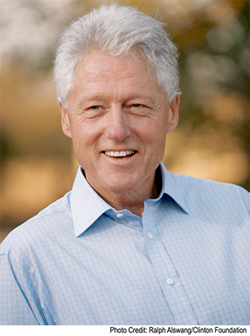 President Bill Clinton to deliver keynote address at largest solar energy event in the Americas. The fast growing solar energy industry comes together September 10 – 13 when Solar Power International 2012 (SPI ‘12), convenes in Orlando Fla. Taking place at the Orange County Convention Center, SPI ’12 is the premier business-to-business global solar conference and expo for professionals in solar energy and related fields. The convention center has a one-megawatt PV system that produces approximately 1,400 megawatt hours of electricity per year (enough to power 100 homes). Presented by the Solar Energy Industries Association (SEIA) and the Solar Electric Power Association (SEPA), SPI ‘12 features over 1,200 international and U.S. exhibitors and is expected to bring more than 21,000 attendees from 125 countries. President Bill Clinton will deliver a keynote address on Wednesday, September 12. In addition, SPI ’12 offers a comprehensive conference program with approximately 40 sessions in six tracks: Finance, Markets, Policy, Technology, Grid and Transmission Planning and In the Field. Topics include: new financing projects, policy initiative and changes that affect solar, avenues of opportunity in new markets, and technologies beyond PV and CSP, such as micro-inverters, central inverters and power optimizers. “The $8 billion solar industry more than doubled in 2011, making it the fastest growing sector in the United States today,” said Rhone Resch, president and CEO of SEIA. “SPI has grown exponentially as well and we are extremely proud that the show continues to be the epicenter for all that is new in solar. It is the comprehensive place to be to promote, launch, sell and demonstrate products and services for the global solar industry and we expect another outstanding event in Orlando.” “SPI is the one week each year when people throughout the entire global solar value chain come together under one roof in the U.S., making it the only can’t miss solar trade show in the country,” said Julia Hamm, president and CEO of SEPA. “SPI provides its attendees with the best opportunity available to connect with current customers and suppliers and to meet new ones. And, with the addition of President Clinton to the agenda, SPI will be even more exciting than ever.”
Philly Brotherhood Pushes To Get Solar Job Growth Back on Track
 “With a diverse solar industry already employing thousands of Pennsylvanians, now is the time to keep the foot on the throttle to get solar back on track. HB 1580 would ensure that the Commonwealth can sustain a stable market for continued solar growth over the coming years and beyond” Today the International Brotherhood of Electrical Workers (IBEW) Local 98 gathered with city officials and solar business leaders to urge Pennsylvania lawmakers to save solar power investment and job opportunities in the state. In recent years, Pennsylvania was one of the nation’s fastest growing solar economies. There are now more than 6,000 solar electric systems installed in the Commonwealth. Those installations have supported thousands of high-quality local jobs, but they also equate to over three times more solar power than state law requires. With solar supply now far outpacing demand, new project installations are slowing and the once-thriving Pennsylvania solar job engine is grinding to a halt. A solution exists in Harrisburg: HB 1580 would increase the state’s solar goals for the next three years, making use of an industry ready to build more solar power today and making tomorrow’s aggressive solar goals more achievable. IBEW Local 98 Business Manager John J. Dougherty said, “Solar jobs are good, local jobs. Through the recession economy, this new industry provided a rare bright spot of job growth right here in Philadelphia, especially for the hard-hit construction sector. Without leadership from Harrisburg on HB 1580, those solar jobs will be put on hold until 2014. Pennsylvania can’t afford that kind of inaction.” Local 98 members work in the electrical, telecommunications and broadcast industries in Philadelphia and the surrounding counties. Read the full article: Philly Brotherhood Pushes To Get Solar Job Growth Back on Track
Monson, MA Resident Taps Disaster Relief Funds to Rebuild and Go Solar
 Less than a year ago, Russ Bressette’s Monson, Massachusetts home was destroyed by a devastating tornado. With the help of Real Goods Solar and a $1.00 per watt Disaster Relief rebate from the Massachusetts Clean Energy Center (MassCEC), he is including solar on his highly-insulated, super efficient new home. Mr. Bressette is focused on making his home as efficient and environmentally friendly as possible. “I’m rebuilding green and I’m also talking to my neighbors about rebuilding green and going solar because I just think it’s the way to go in the future to save yourself money. If you don’t like the price of energy, do something about it – Go Green!” The MassCEC Natural Disaster Relief Adder is an addition to the Commonwealth Solar II Rebate Program for homeowners who incorporate solar into their rebuilding process. A total of $1M is available in the communities of Brimfield, Charlton, Hampden, Monson, Palmer, Southbridge, Springfield, Sturbridge, West Springfield, Westfield, and Wilbraham. Andreas Schmid, the Solar Specialist from Real Goods Solar that worked with Mr. Bressette, feels that getting up to $5,000 more on the state solar rebate makes solar energy not only affordable, but a way for eligible homeowners to save a huge amount of money on their electric bill. “Ultimately this adder will help people to get back on their feet and recover more quickly while saving money in the long-run.” For its part, the MassCEC is pleased to see homeowners take advantage of the funds allocated to those affected by the tornadoes. MassCEC Senior Director for Renewable Energy, Andy Brydges said, “Everyone rebuilding after the tornado should look into the possibility of solar hot water or solar electric as a way to reduce or even erase their monthly utility bill, and reduce their dependence on fossil fuels.”
SRP, ASU Partner on 1-Megawatt Solar Power Plant
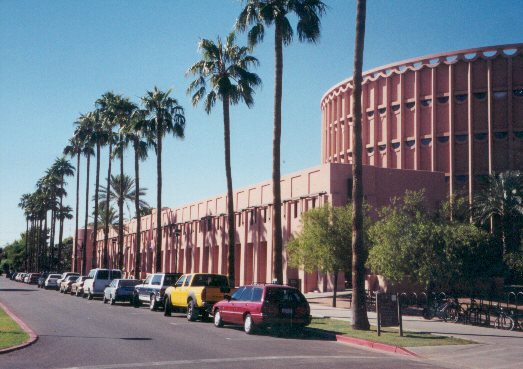 Salt River Project (SRP), Arizona State University (ASU) and SunPower Corp. recently announced an agreement to build a 1-megawatt solar photovoltaic power plant at ASU’s Polytechnic campus in Mesa, Ariz. The 1-megawatt facility will be the first commercial deployment of SunPower® C7 Tracker technology, a solar photovoltaic tracking system that concentrates the sun’s power seven times designed to achieve the lowest levelized cost of electricity (LCOE) for solar power plants available today. SunPower is engineering and constructing the plant on the southeast corner of the ASU Polytechnic campus, and will operate and maintain it. Under a purchase-power agreement, SRP will buy the entire output of the solar plant from SunPower and, in a separate agreement, ASU will purchase all of the energy attributable to the plant for use at its Polytechnic campus. The plant is expected to produce an amount of energy equal to that needed to serve about 225 SRP customers’ homes, will require minimal water use, and supports ASU’s renewable energy goals. Construction of the plant is contingent on a number of factors, including receipt of all applicable permits. Read more…
For vets returning to US, green energy jobs await
 By ANDY BROWNFIELD, Associated Press Ben Noland served in the U.S. Marine Corps for eight years, then spent 18 months looking for a job. “I’ve probably put my resume in to 300 places in the past year,” the 33-year-old Kenton resident said. “The farthest I’ve ever got was a phone interview.” Noland finally landed a job installing solar panels at Tipping Point Renewable Energy, a Columbus-based solar power company that is hiring only military veterans for its installation crews at a time when unemployment among former service members is outpacing that of civilians. Tipping Point’s efforts echo those of companies and groups nationwide to hire veterans in the green energy industry. Denver-based nonprofit Veterans Green Jobs is one of the largest, having trained or placed 370 veterans in the last four years. And a pilot program by five of the nation’s largest energy providers, called Troops to Energy Jobs, provides training and credentials to military veterans, as well as college credit for their military training and experience. About 240,000 veterans from the wars in Iraq and Afghanistan have returned to the U.S. and are unable to find work. They make up a growing chunk of the 850,000 veterans overall who are out of work. The White House expects an additional 1 million service members to return to civilian life by 2016. Associated Press Read the full article:For vets returning to US, green energy jobs await
Upsolar now sponsoring the “Dancing Flowers” exhibit at the Center for Sustainable Urban Valdespartera
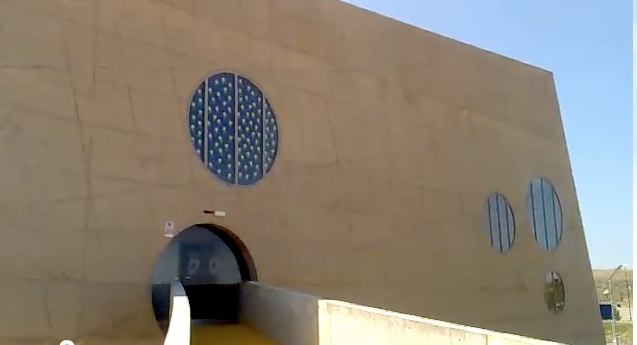 For the next several years, the solar-powered kinetic installation will greet visitors to the Center. “With two square centimeters of solar cells, you can move a flower. With many panels – each only one square meter – you can power a home. Imagine if all of our rooftops were covered in solar; you could move the world.” Artist Alexandre Dang has created dozens of solar-powered kinetic art exhibits to raise awareness of issues including sustainability and child welfare. His installations have reached millions of viewers in high-traffic locations including the European Parliament and the Royal Palace of Brussels. Since Dang focuses on starting the renewable energy conversation at a young age, the artist designs lively projects that are also able to engage children. “I’m looking to trigger public discussion on solar energy and promote widespread use of this renewable resource,” said Dang. “With two square centimeters of solar cells, you can move a flower. With many panels – each only one square meter – you can power a home. Imagine if all of our rooftops were covered in solar; you could move the world.” Upsolar was drawn to Dang’s playful approach to raising energy awareness. The company believes that supporting visionaries like Dang is critical to communicating the value of solar energy and to growing its implementation. “We support Alexandre’s effort to reach out in a way that truly anyone can understand,” commented Upsolar CEO Zhe Jiang, “The ongoing exhibit in Zaragoza is compelling for all on-lookers, and its value remains in its ability to prompt people into rethinking the potential of the limitless energy from the sun.”
U.S. Solar Cell Manufacturers Respond to Chinese Commerce Ministry Statement
 Following is a statement by the Coalition for American Solar Manufacturing (CASM), led by SolarWorld Industries America Inc., the largest domestic crystalline silicon solar cell and panel producer. The statement responds to what CASM characterized as misleading and unfounded statements by China’s Ministry of Commerce regarding the antidumping and countervailing petitions filed by SolarWorld Industries America Inc. against China’s trade practices. The statement is authorized by coalition spokesman Gordon Brinser, who also is president of SolarWorld. “Finally, regarding environmental issues, China’s record is equally troubling. For example, only last month, China temporarily suspended the operations of Zhejiang Jinko Solar Co. after hundreds of protesters, some of whom overturned vehicles and ransacked offices, complained about ‘toxic smokestack emissions,’ large fish kills, and an unusual number of cancer deaths.” “The Chinese government’s claims that our actions are improper and protectionist, and that its illegal subsidies and massive dumping of solar product are helping the global economy and the environment, are absurd. China is one of the biggest trade protectionists in the world. In the solar industry, China is gutting manufacturing and jobs here in America and abroad while China’s solar industry pollutes its own people. The accusations have no basis in fact. “Regarding trade issues, the use of antidumping and countervailing duty laws is a WTO-legal and quasi-judicial process. The determinations that will be made by the U.S. government will be based on fact and reviewable under U.S. and WTO law. For China to label the actions of a U.S. industry ‘protectionist’ when China is seeking to defend itself against egregiously unfair trade practices is baseless. China is a heavy user of the antidumping and countervailing trade laws to ‘protect’ its own industries. It is no coincidence that China has been named in the most antidumping and countervailing duty cases from countries all around the world: It is the worst violator of global trade laws. Read The Full Article: U.S. Solar Cell Manufacturers Respond to Chinese Commerce Ministry Statement
Elon Musk Donates Solar Power Project to Soma City in Fukushima Prefecture, Japan
SolarCity will manage project at no cost to provide clean, renewable electricity to water treatment plant in area still recovering from effects of tsunami  FUKUSHIMA, Japan—-Elon Musk, through his Musk Foundation, has donated $250,000 to build a solar power system in Soma City, in the Fukushima prefecture of Japan. Mr. Musk is visiting an area of Soma City today that was devastated by a tsunami earlier this year, for a ceremony at the site where the project will be built. SolarCity is donating time and resources to manage the project, which will provide renewable electricity to a city facility located on reclaimed industrial land not suitable for agriculture. “We are grateful to Elon Musk and the Musk Foundation for this generous gift, and for coming such a long way to personally visit Soma City” The solar arrays will consist of high-efficiency solar panels manufactured in Japan, and will be installed by local workers in Fukushima. The project will create local construction jobs and can act as a model for the reuse of disaster-stricken areas in other parts of Japan for clean energy generation. Read more…